MIO: Memories In Orbit Review
Release Date: 20/01/2026
Platforms: PS5, NS2 & PC.
Platform played on: PS5.
Hours Played: 65 (100% Complete).
Score: 9/10
MIO: Memories In Orbit is a metroidvania that immediately pulls you in with its sense of mystery. From the very beginning, you’re left wondering where you are, who you are, and what exactly is going on, and the game is in no rush to give you clear answers. Instead, it slowly reveals its story and context as you play, which makes exploring its world genuinely compelling. It’s one of the few metroidvanias in recent years where I found myself actively interested in the lore rather than just tolerating it. You can really feel how much effort the developers put into the world-building, to the point where many collectibles exist purely to expand the lore and help you piece together what happened. You play as MIO, a small bot tasked with saving a spaceship from rogue machines, and that’s about as far as it’s worth going without spoiling the experience.
The world itself isn’t massive for the genre, but it does an excellent job of feeling larger than it actually is. Areas are layered, complex, and rarely just simple square rooms, which makes exploration more engaging and allows secrets to be genuinely well hidden. Visually, the game also stands out thanks to its unique, hand-drawn art style that gives the entire world a distinct identity. On top of that, there’s a particular twist to how the world works, involving a puzzle that makes you interact with the environment itself in a way I haven’t seen done in other metroidvanias. Without going into spoilers, those moments were easily a highlight and made the world feel alive rather than static.
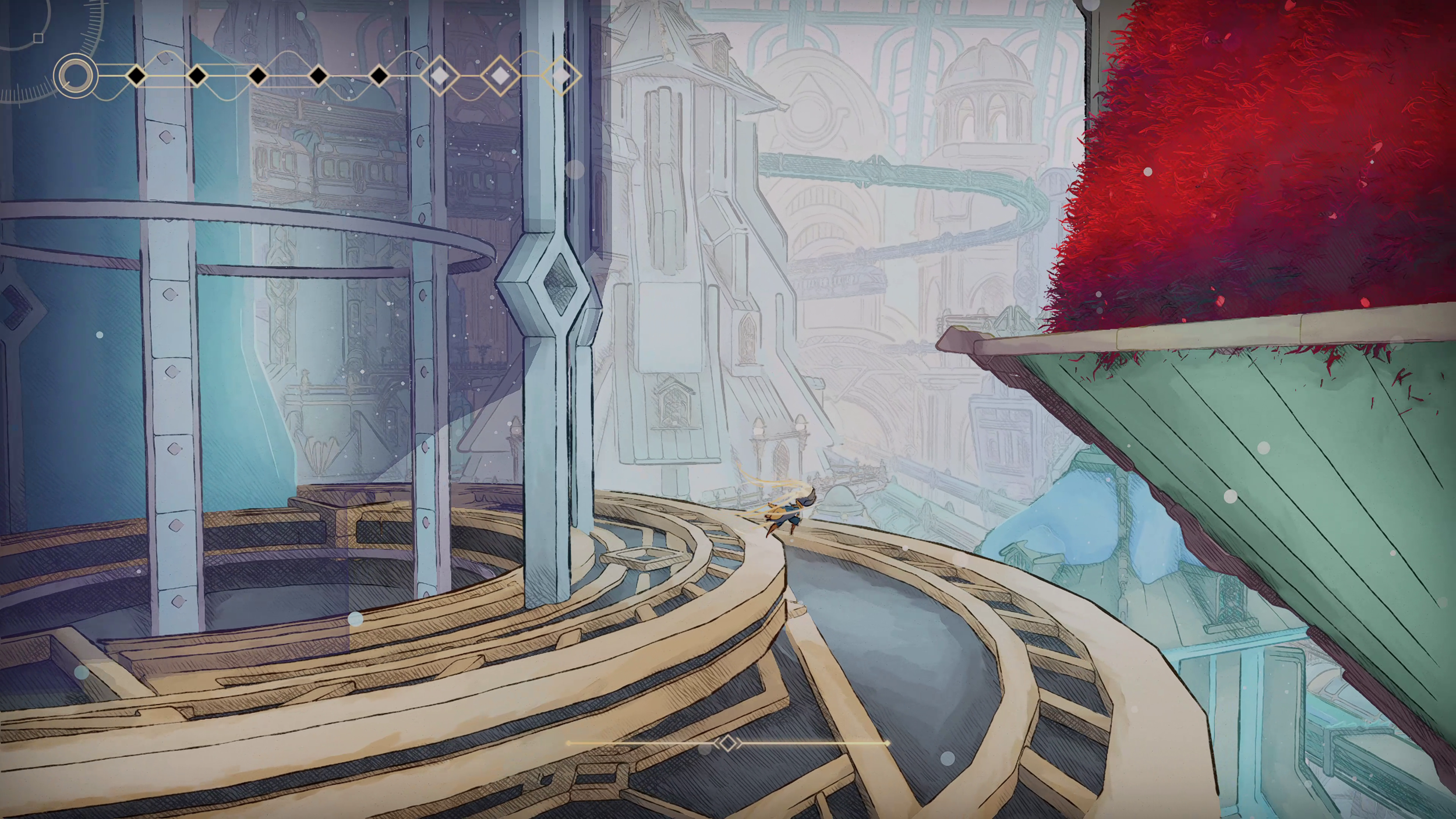
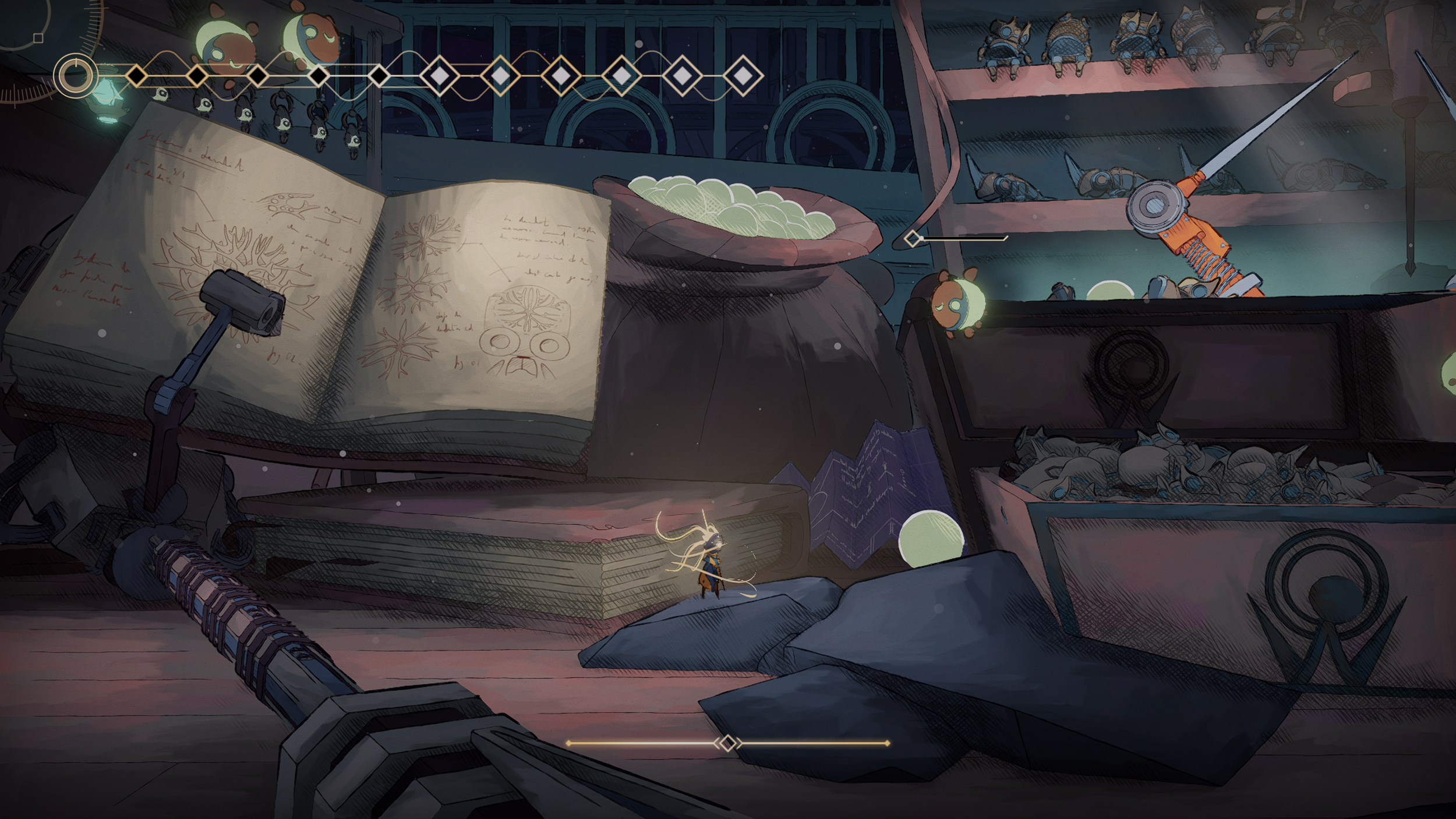
There’s a lot to do here. If you know exactly where to go, you can reach a normal ending relatively quickly, but that barely scratches the surface of what the game offers. There are tons of optional areas, bosses, side quests, and NPCs to meet, to the point where it almost feels like there’s more optional content than main story. With a wide variety of collectibles, 18 bosses, and multiple endings, MIO really rewards players who enjoy fully exploring a game rather than just following the critical path.
Gameplay-wise, MIO is very much a challenging metroidvania, and the difficulty leans heavily toward platforming. Some sections are brutal, and there are moments where you’d swear a sequence is optional, only to realise it’s actually required for progression. A lot of these sections come down to trial and error, learning layouts, and building muscle memory rather than pure reaction speed. Boss fights are tough but generally fair, though I’d say platforming is the real challenge overall. Thankfully, MIO feels great to control. Movement is tight, responsive, and precise, which is essential given how demanding the game can be. There are also assist options available that help smooth out the difficulty without completely removing the challenge.
Progression follows familiar genre conventions: exploring, getting lost, and unlocking abilities that open up new paths. While that structure isn’t new, some of the abilities themselves are. One ability lets you reset your jump and recover stamina by hitting objects mid-air, enabling some very creative and demanding platforming challenges. Another lets you move along walls and ceilings like a spider, completely changing how you approach certain areas.
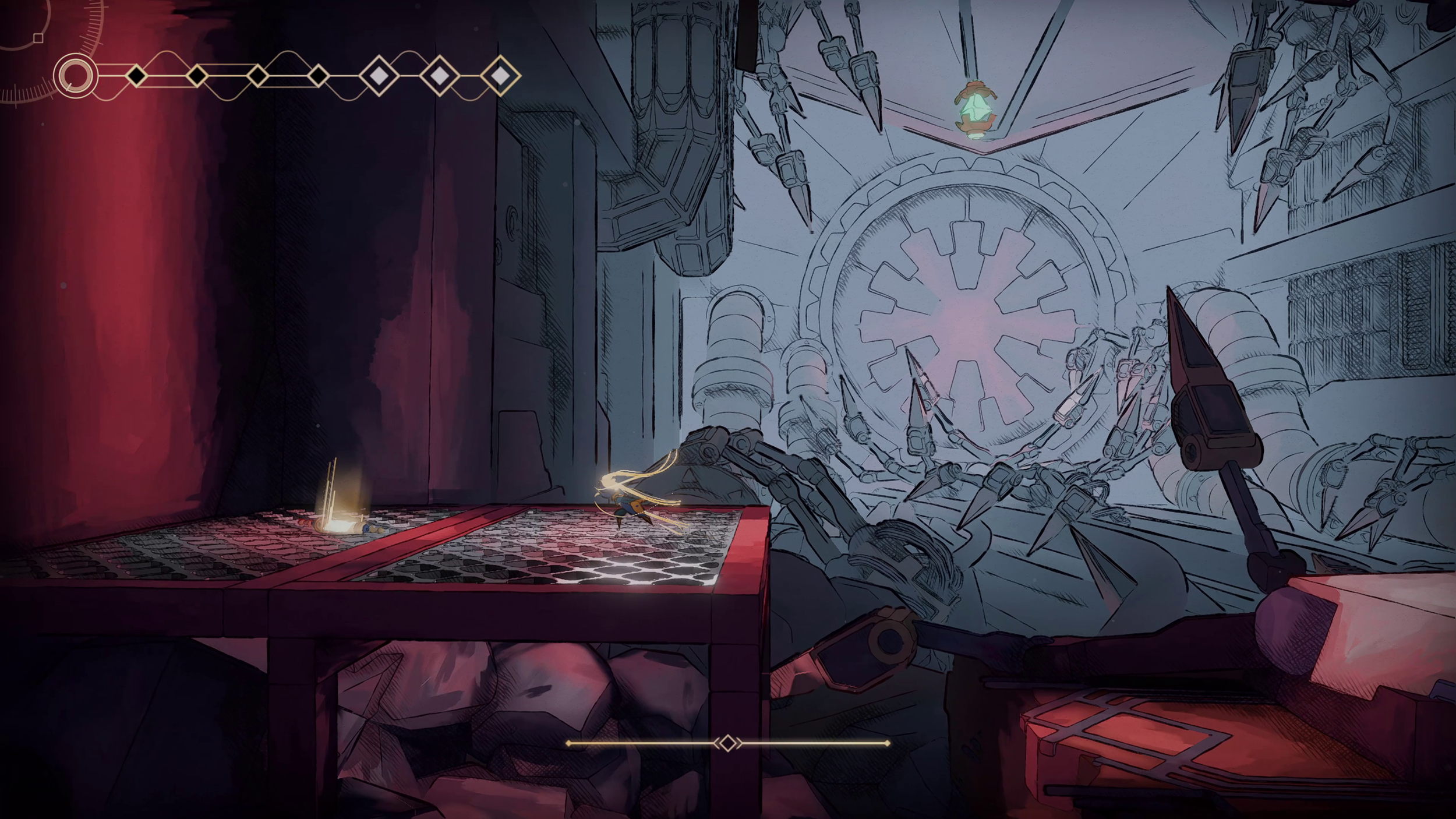
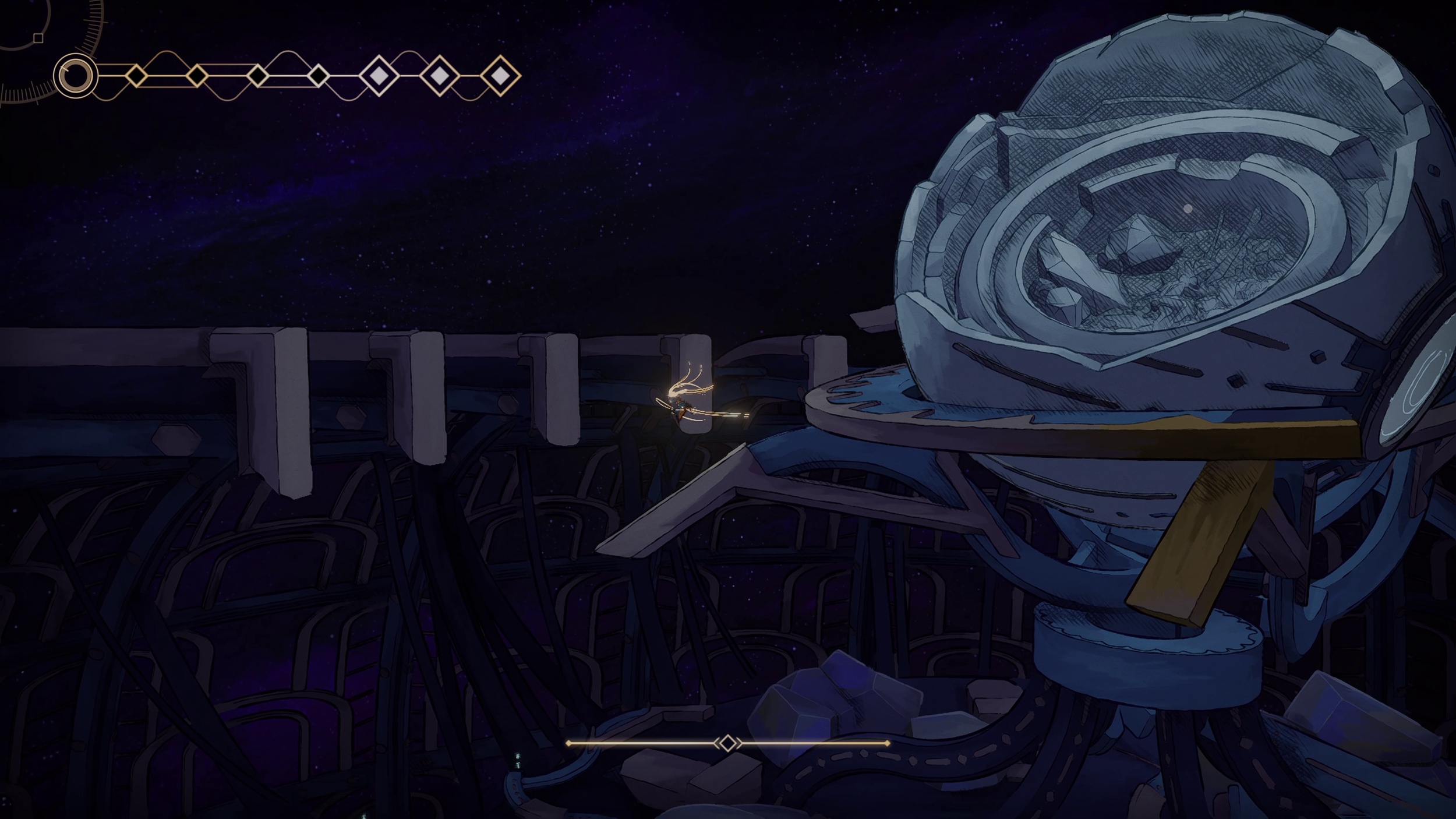
It’s hard not to compare MIO to games like Hollow Knight and Silksong. The world isn’t on that same massive scale, but some mechanics clearly feel inspired by them. There are moments where you have to pay to heal, and some runbacks can be rough, sometimes even worse than expected. You also don’t get access to different weapons, instead relying on collectibles that permanently increase your attack power. This can be a downside, as you’ll be using the same three or four hit combo throughout the game, with only modifiers adding variety. That said, there are things MIO does better. Boss fights are mostly clean, without extra enemies cluttering the arena; there’s no contact damage, and the dodge feels closer to a parry with i-frames. All of this makes boss combat feel challenging but fair.
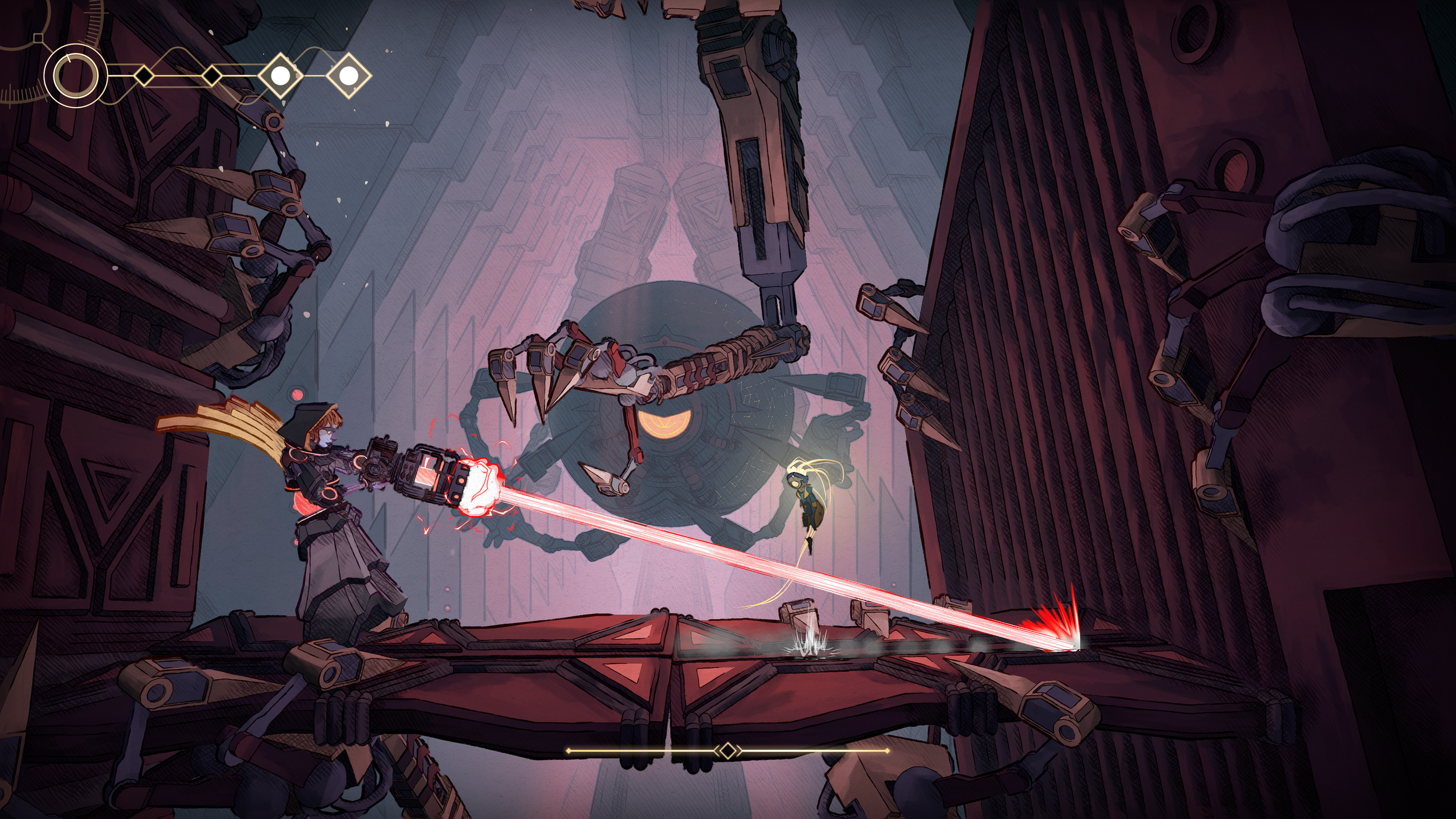
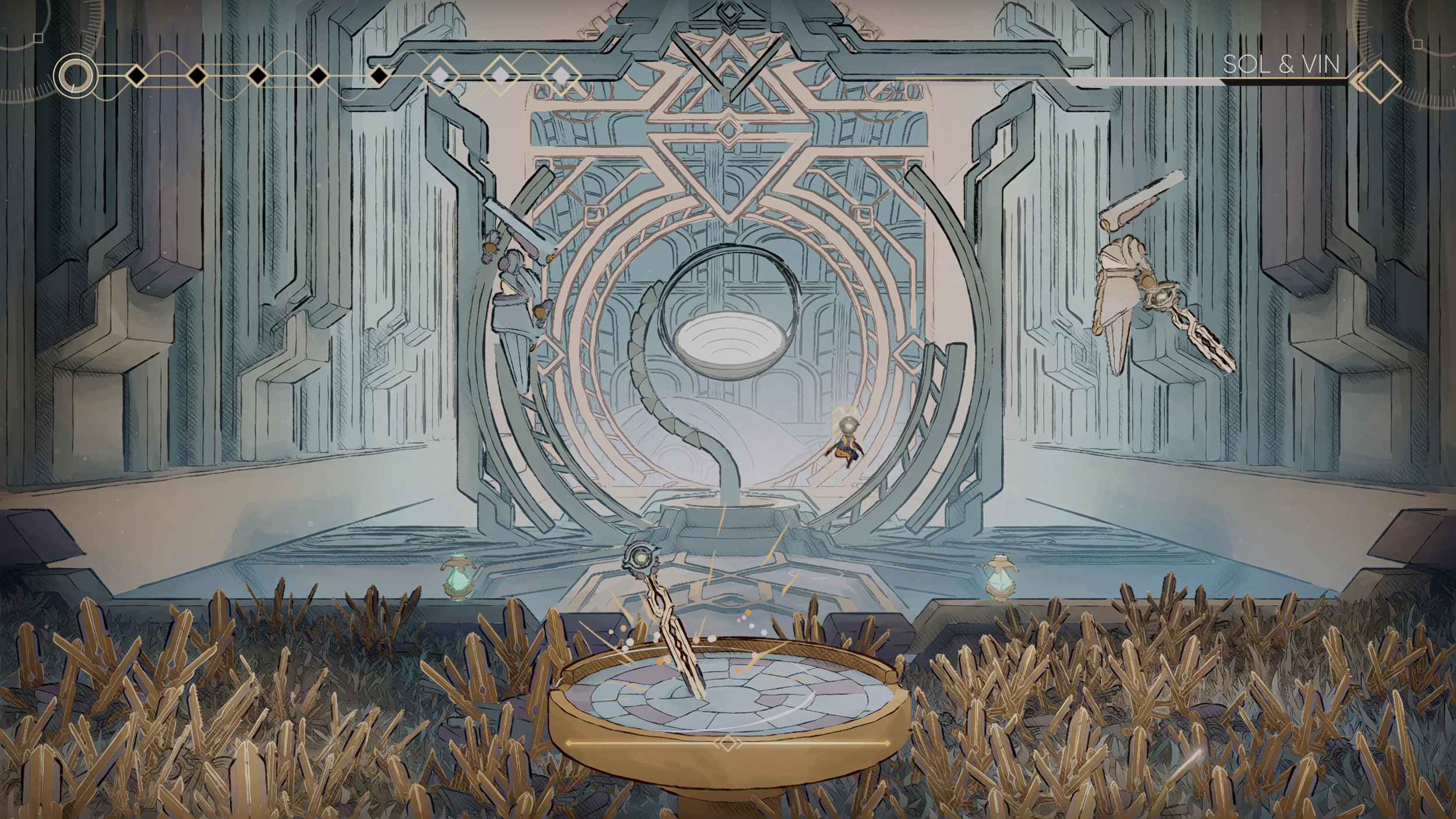
Even though it’s one of the first metroidvanias of the year, MIO: Memories In Orbit already feels like a standout. It’s not a game that blends into the background once you’re done with it, and it’s one I won’t forget any time soon. If I had to compare it to anything, Nine Sols comes to mind, especially in the way it builds a mysterious, half-mechanical, half-organic world with a strong identity. If you’re into metroidvanias, this is absolutely a game you should play, and one I really hope gets a sequel.