Valor Mortis Review
Parry like it’s 1812.
Valor Mortis is the first wholly owned IP from One More Level, the Polish studio behind the Ghostrunner games, and it’s a soulslike with a pretty big twist. Set in a supernatural take on 19th-century Europe, you play as William, a resurrected soldier of Napoleon’s Grande Armée who fights with weapons from the Napoleonic era alongside a handful of supernatural powers. The twist is that the whole thing plays out in first person, with some light parkour thrown into the mix. That makes a lot of sense once you remember who made it.
Let’s start with that first person perspective, because it shapes everything else. Valor Mortis is far from the first first person game with a stamina system that you could squint at and call a soulslike, but it’s definitely one of the first to wholeheartedly commit to being one. It has its caveats, but it works rather well, and you can tell it comes from a team that already knows how to make first person action feel good. Even so, while it’s clearly a soulslike, it feels very different from the usual third person entries in the genre and a lot more closed in. You simply can’t see as much of what’s going on around you. Luckily the game rarely throws a ridiculous number of enemies at you at once, and when a group does come at you it almost never feels unfair or like you’re constantly being hit from behind. Most of the times I took a hit in the back, it was because I had run past someone on purpose or left them behind me.
Being first person, the combat is naturally slower than in most soulslikes, and it leans heavily into parrying rather than dodging. Dodging is completely valid and usable, but the mechanics push you towards learning to parry, since breaking an enemy’s stagger bar does by far the most damage and is a lot faster than whittling them down with raw hits. I have a strange relationship with the parrying here. I love parry systems in most games and usually build around them, yet I was genuinely bad at parrying in this one and I still can’t quite pinpoint why. I think it’s a mix of a very unforgiving parry window and timings that feel a little weird and off with certain enemies. Some foes I could parry every single time without a problem, while others would just take me apart. Thankfully, if you explore a little early on you can find a few optional upgrades that widen your parry window, and pairing those with the rapier made a big difference for me.
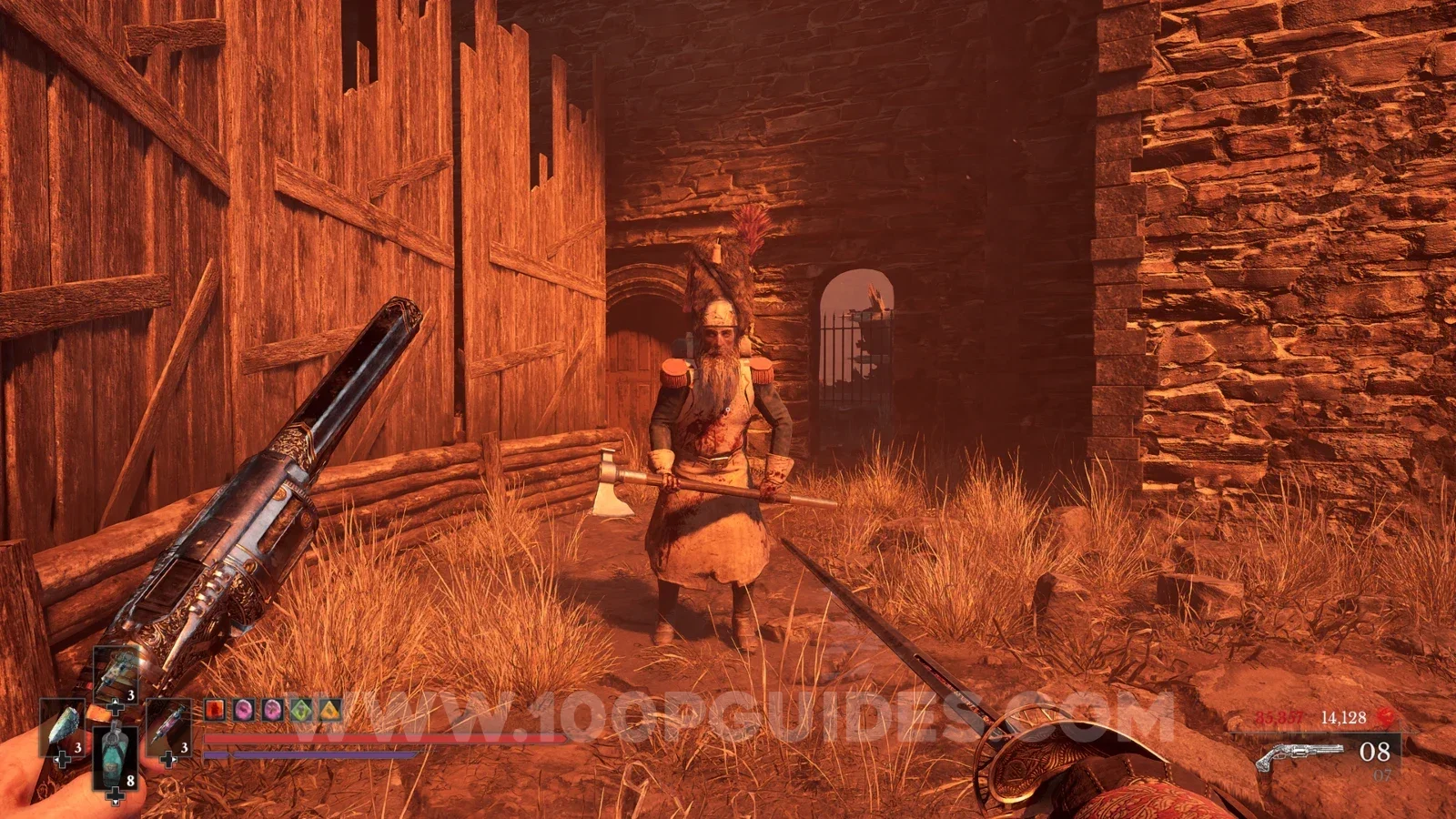
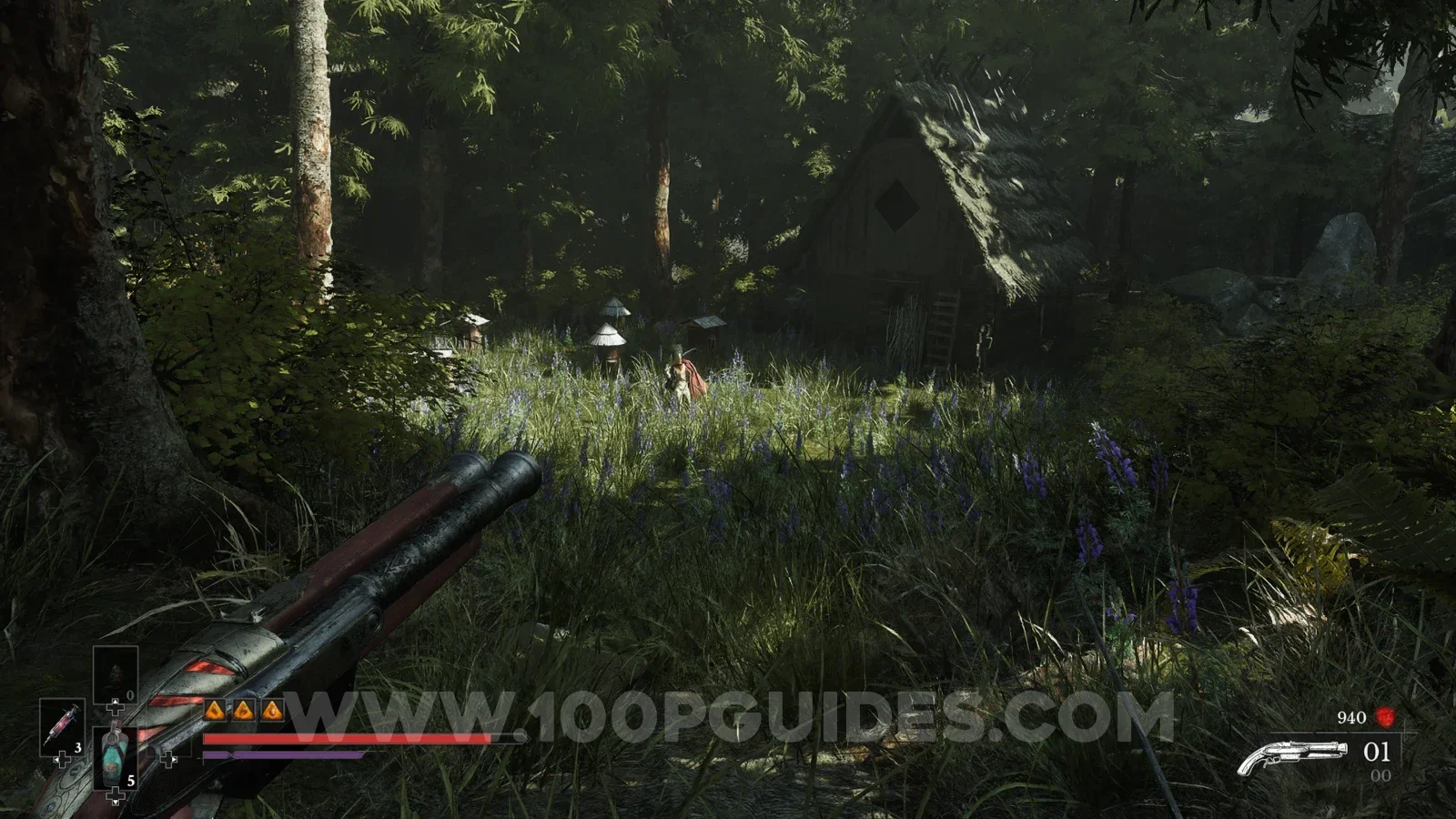
This is one of those classic cases where the game starts off hard and gets a lot chiller as you go, as long as you put some time into exploring, which is true of a lot of games in the genre. Once you have a few upgrades and enough ammo for your various firearms, you can deal with plenty of enemies from a safe distance without ever getting close. The combat as a whole is quite simple, but it’s solid. It isn’t perfect, but I never felt like I died unfairly, and that counts for a lot in this kind of game. It also gets a lot more fun as you unlock new abilities. Once you can slow down time in mid air and wall run, you can chain a wall run into a grappling swing and land a slow motion headshot on an enemy in mid air. In moments like that you really feel the Ghostrunner DNA coming through.
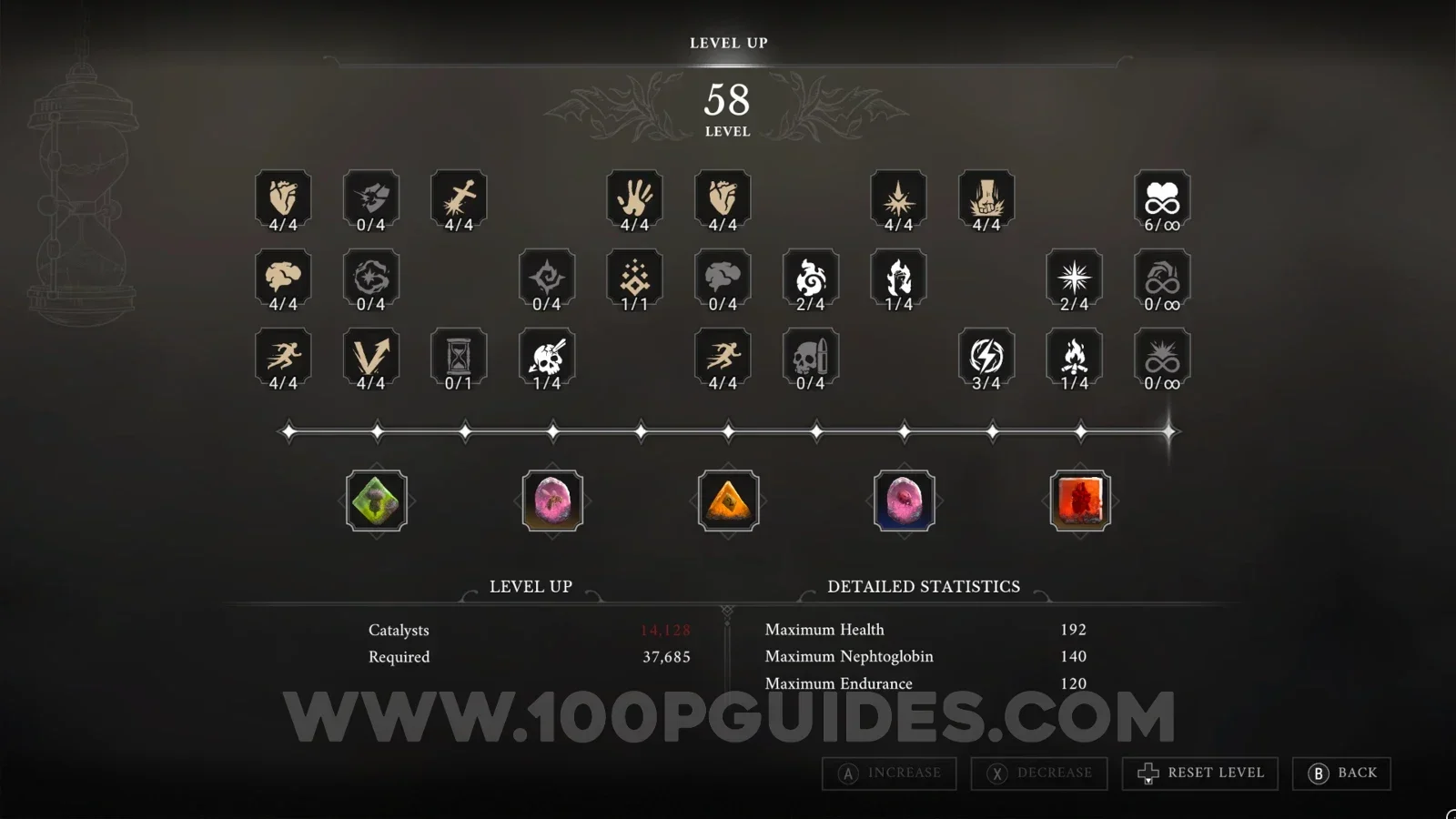
Progression covers the usual soulslike ground. Weapons are upgraded with materials that get rarer the stronger the weapon becomes, and some upgrades let you pick between two passives for that weapon. Nothing too special, but again, solid. Then there’s the skill tree, which is where you spend the game’s equivalent of souls. Like most games in the genre, you’ll lose them if you die and don’t make it back to pick them up. It’s basically about choosing which stat to level, but you can’t just dump everything into the same one all game long. Once you’ve maxed out the points in a node, you have to wait a few more levels until you reach the next node that lets you invest further. That holds until the very end, when the game finally lets you pour points into whatever you like with no limit.
Which brings me to the enemies. Visually most of them are interesting, and this weird mix of 19th-century soldiers and monsters gives off some cool and creepy vibes, especially with a few specific ones. Their actual attack patterns are fine, but nothing too special. Each enemy has maybe two different melee combos, and some will just hang back with a firearm. On its own that’s okay. The problem is that enemy types start repeating themselves quite often throughout the game. I’m not saying there are only two enemies in the whole thing, and there have definitely been worse games in the genre on that front, but a few more enemy types would have gone a long way towards making things feel less repetitive.
There’s also one odd little thing that annoyed me maybe more than it should have, and that’s how enemy hitboxes handle body blocking. Most games in the genre have some way of stopping you from simply running past everything, whether that’s enemies with insane dash attacks, a very long tether, or just plain aggression. Valor Mortis instead gives pretty much every enemy an insanely wide body hitbox. I get that it’s there to stop you from sprinting past everything. But I got caught up against a wall or stuck in a corner, unable to do anything about it even when I actually wanted to fight, far more often than I should have.
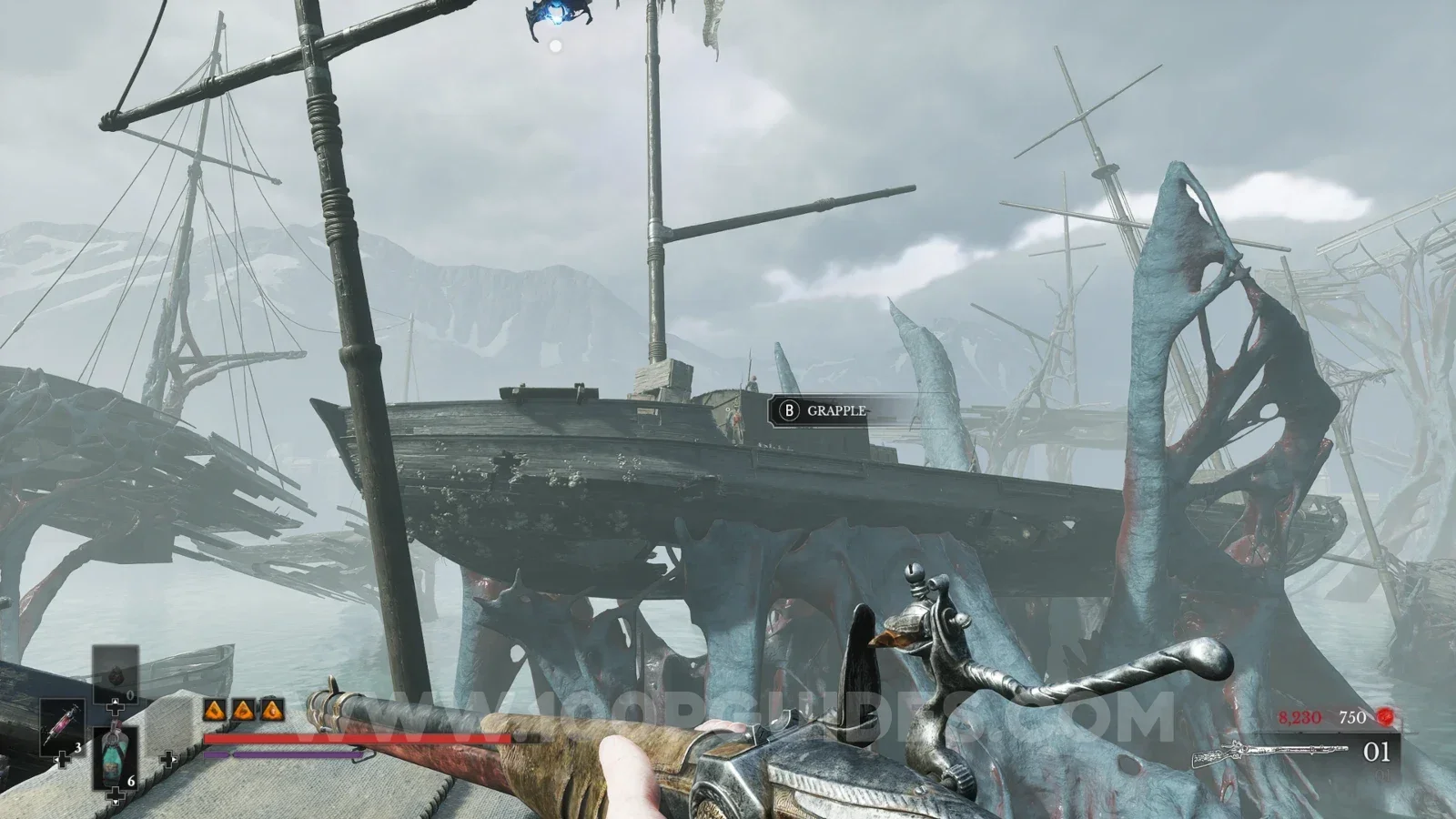
The environments, on the other hand, are top notch. The dark, dreary atmosphere of the world is beautifully done, and I don’t just mean the graphics, which are gorgeous. The art direction really makes the world feel alive, or rather dead. The game isn’t huge either, running somewhere around 10 to 15 hours if you stick to the main story, but the areas are diverse enough to keep things fresh. From burned down villages to deep mines to a university in a large city, it does a great job of making sure this dreary world never feels dreary to see and explore. I even got some Bloodborne vibes from a few of the areas, which is obviously a nice bonus. You can also tell the team are fans of the originals, because I spotted a nice little nod to Elden Ring in the form of two pots with arms sticking out of them, sitting out of bounds.
Structurally it’s a fairly linear game. There’s a main hub in the middle of the world, and you branch out from it in different directions as the story progresses. Some paths need a key you get by advancing the story, while others need one of the several metroidvania style abilities the game hands out. Exploration in general is decent without being anything crazy, but there are more than enough secret and optional paths to take, and they’re usually well worth it. You’ll also pick up the odd side quest, and much like most of the genre, they don’t hold your hand with quest markers. You only get a quest updated prompt when you stumble across the relevant item, and that’s a big kudos from me.
All in all, Valor Mortis is a very unique soulslike experience and a solid game. It’s not an easy one, especially at the start, and while the combat isn’t fast paced, spectacular or anything particularly special, it does a great job of delivering something solid, cool and genuinely rare.